Regulated retail · Software development
Complex rules. A usable checkout.
A dealer needs to complete a sale while handling product restrictions, records, and changing requirements. We built a point-of-sale application that brings those checks into the transaction.
← All case studies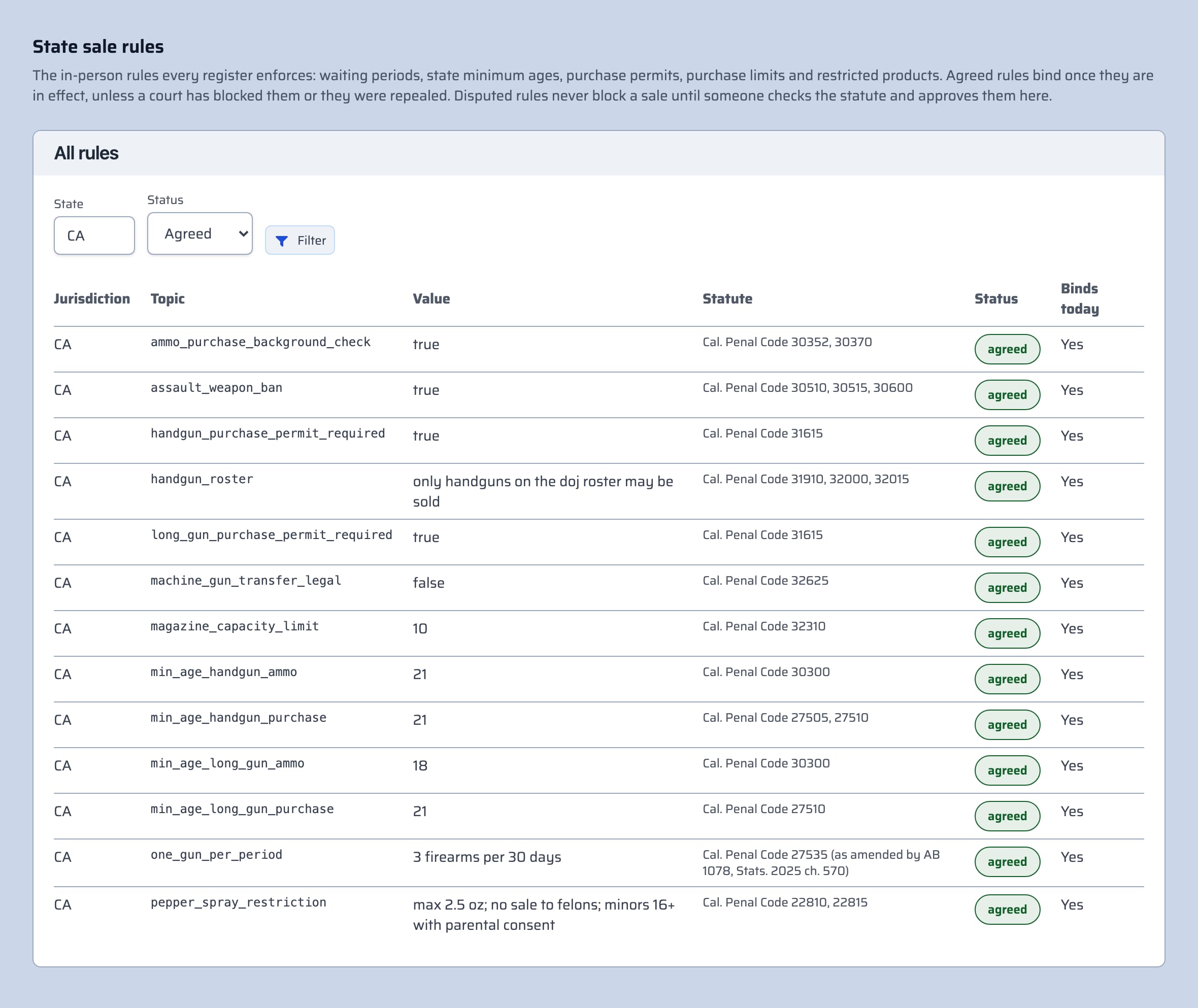
The challenge
Bring overlapping requirements into a workflow that staff can use during a sale.
Our contribution
A point-of-sale system with a maintained rules library, transaction checks, recordkeeping, and access controls.
The result
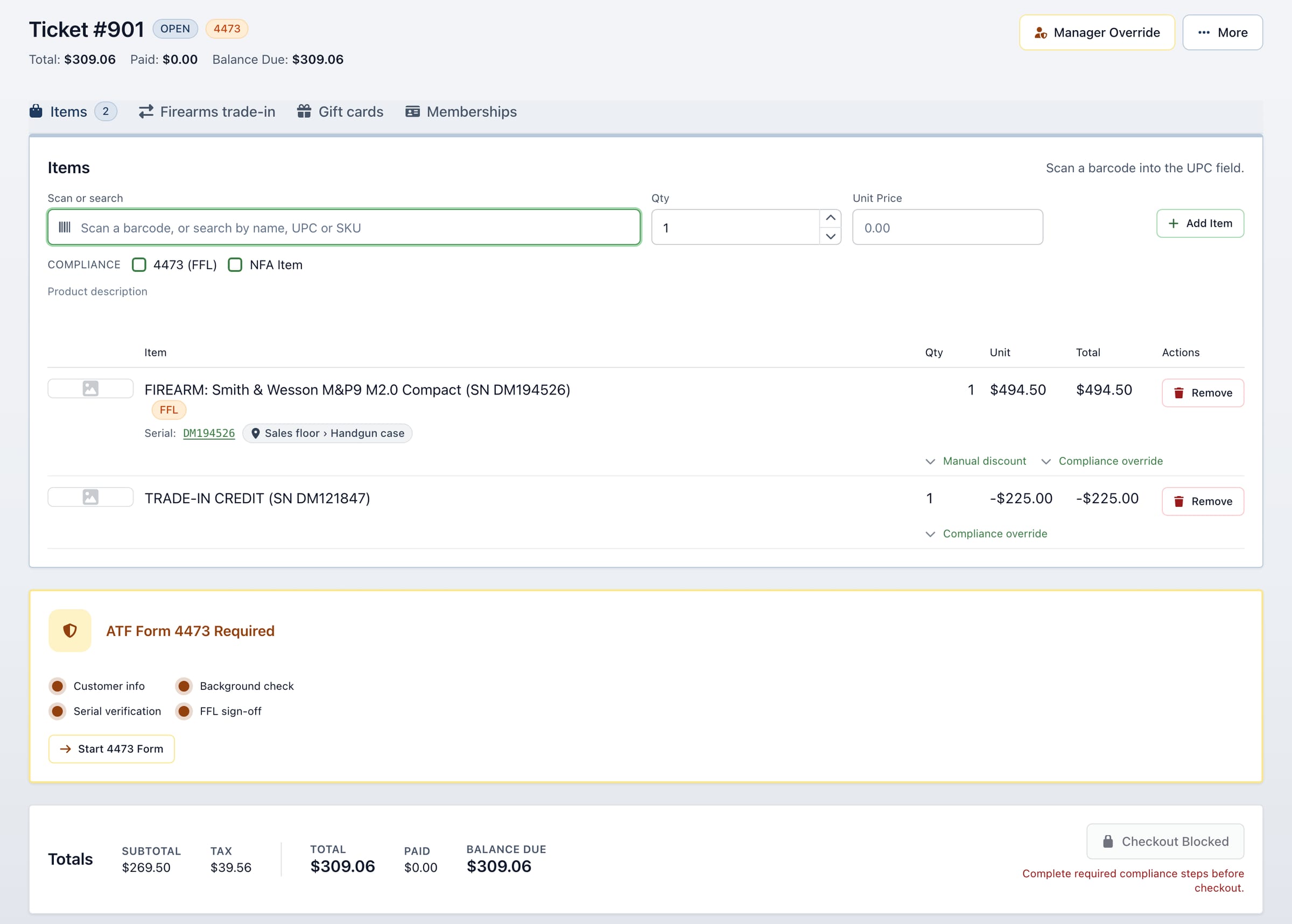
Rule checks and required steps appear in the register workflow, including checkout blocks when required steps are outstanding.
From requirement to transaction
Put the requirements where the work happens.
A transaction brings together the product, buyer, location, forms, and applicable rules. Those requirements need to be reflected in what the application allows a clerk to do next.
The system connects that logic to the register, rather than leaving every check to memory or a separate document. Rules are maintained as requirements change.
- 9,171researched rules in the featured implementation
- 4connected areas: compliance, local rules, tax, and data security
Application capabilities
Four connected areas of the system.
Explore the capabilities behind the checkout. These describe the featured implementation, rather than legal guidance for a particular transaction.
01Federal compliance and records
- Background-check workflow and transfer-date calculation from the register.
- Acquisition and disposition records with a correction history.
- Preparation of required transaction and multiple-sale forms.
02State and local requirements
- A researched rules library covering restrictions, permits, and purchase limits.
- Waiting-period calculations that account for applicable calendars and exemptions.
- Transfer paperwork and approval status tracked with the transaction.
03Tax and transaction obligations
- Sales-tax nexus tracking and threshold alerts.
- Cash-reporting workflows that account for related transactions.
- Product- and location-specific excise-tax handling.
04Identity and data security
- Tokenized payment data, with card numbers and security codes kept out of application storage.
- Encryption and retention controls for sensitive information.
- Role-based access, multi-factor sign-in, and automated tests of tenant isolation.
The result is a register that connects day-to-day work to the system’s configured rules and controls. Maintaining those rules remains an ongoing responsibility.
A closer look
Keep the next required step visible.
The transfer view brings status and outstanding steps together. Staff can see where a transaction stands without reconstructing its history from separate records.

Let’s talk
Does your software need to handle complex business rules?
Tell us where the requirements, workarounds, or exceptions are getting difficult to manage.